
ASUS Beta BIOS Restores TSME on Consumer Ryzen 9000 CPUs
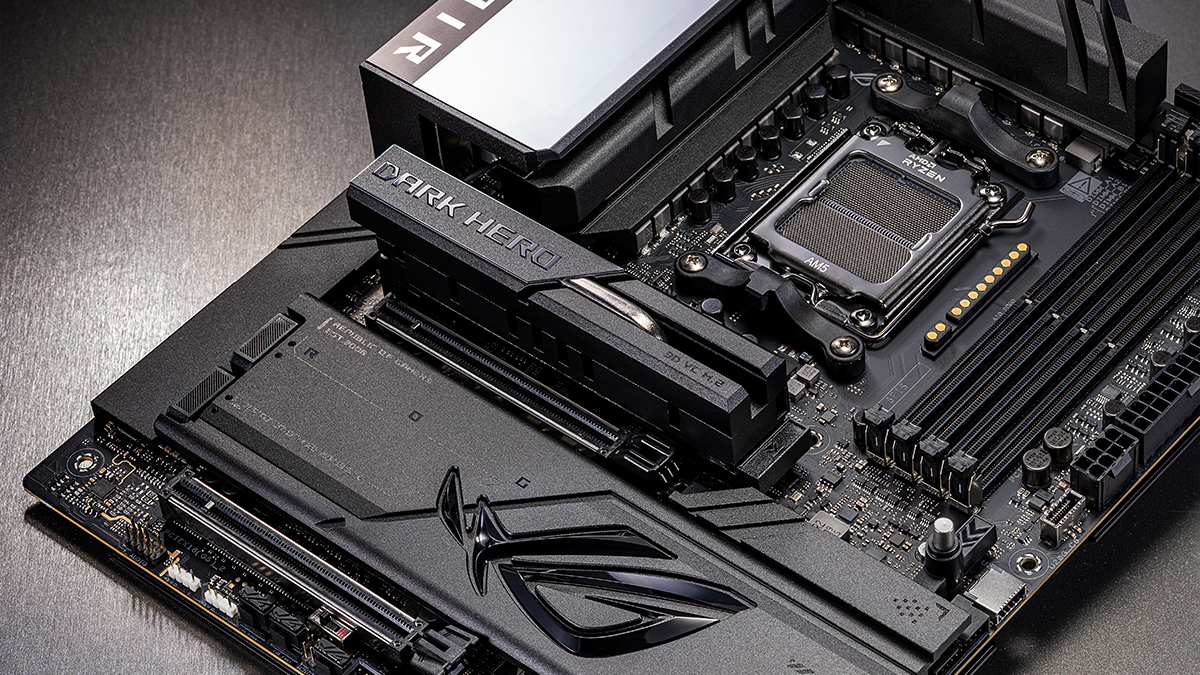
ASUS has started releasing new beta BIOS updates that restore Transparent Secure Memory Encryption support on selected AM5 motherboards using consumer Ryzen 9000 processors. The early rollout arrives ahead of AMD’s previously announced July target and follows criticism after the security option disappeared from certain systems through newer AGESA firmware.
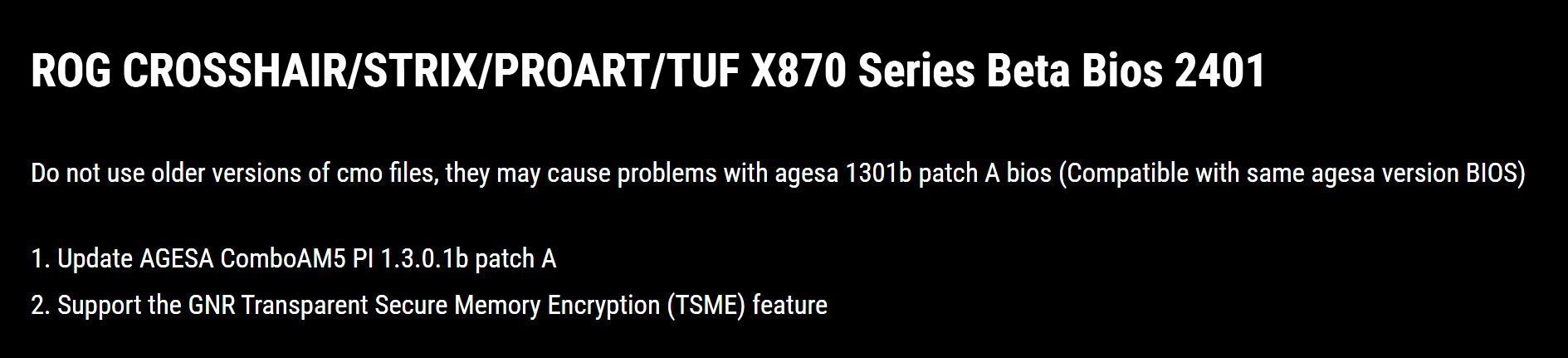
The BIOS files shared through the ASUS ROG forum use AGESA ComboAM5 PI 1.3.0.1b Patch A and explicitly list support for Granite Ridge Transparent Secure Memory Encryption. The rollout currently covers selected X870, B850, X670, and B650 motherboards, including BIOS 2401 for several X870 models, 1686 for B850 boards, 3901 for X670 products, and 3886 for selected B650 motherboards. Availability and version numbers may vary depending on the exact model.
TSME encrypts data stored inside system memory using a key generated by the AMD Secure Processor during startup. According to the official AMD memory encryption documentation, the protection operates transparently once enabled through the BIOS and does not require changes to the operating system or installed applications. Its main purpose is to protect information remaining inside RAM from physical attacks such as cold boot extraction.
The controversy began after users discovered that TSME was no longer available on certain consumer Ryzen 9000 systems using AGESA 1.2.7.0. AMD initially maintained full Memory Guard support on Ryzen PRO processors, while information provided through motherboard vendors suggested that the feature was intended primarily for the professional product line. The company later reversed its position and confirmed that the BIOS option would return to certain consumer Ryzen 9000 desktop processors.
"Based on valuable community feedback, we will reinstate this option in an upcoming BIOS release in July."
— AMD
AMD’s decision to restore TSME on Ryzen 9000 processors, including concerns surrounding the lack of communication when the feature disappeared. ASUS now appears to be one of the first motherboard manufacturers to distribute the revised AGESA firmware publicly, although the current files remain beta releases rather than final production BIOS versions.
Users interested in restoring TSME should confirm that the BIOS matches their exact motherboard model before installation. ASUS also warns users not to reuse configuration files created with older AGESA versions because incompatible settings may cause problems. Anyone who does not require TSME or is currently using a stable system may prefer to wait for the final BIOS release and wider testing.
The restoration of TSME is important less because every gaming PC requires memory encryption and more because manufacturers should not silently remove previously available security capabilities through firmware updates. Even features used by a relatively small group of consumers deserve clear documentation when their availability changes.
ASUS releasing beta firmware before AMD’s July target suggests that motherboard partners have already started implementing the reversal. The next step will be seeing MSI, Gigabyte, and ASRock distribute equivalent updates across their Ryzen 9000 motherboard lineups, followed by stable BIOS versions that do not require users to accept the additional risks associated with beta firmware.
Should security features such as TSME remain available across consumer Ryzen processors, or does AMD have a valid reason to reserve them for Ryzen PRO systems?
