
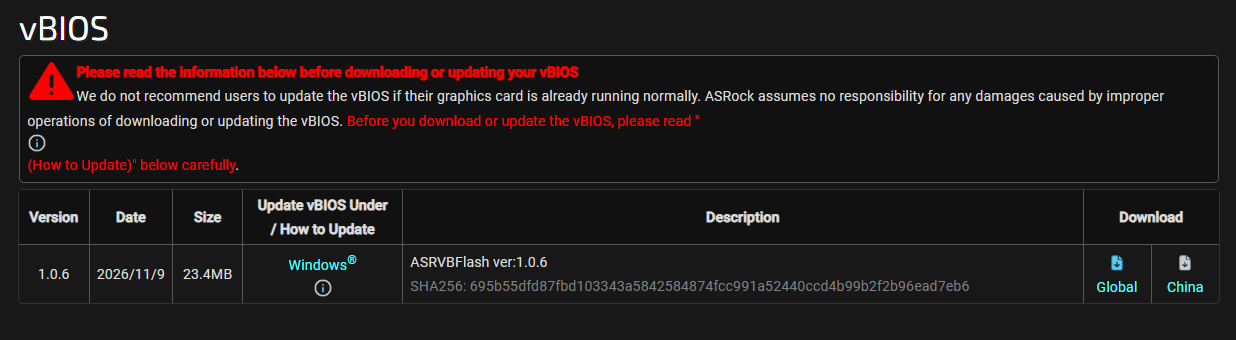
ASRock has released a new VBIOS 1.0.6 update for its Radeon RX 7900 XTX graphics cards following reports that an earlier firmware release rendered several GPUs unable to boot. The replacement package, dated November 6, 2026, reportedly became available on November 10, shortly after ASRock withdrew the problematic 1.0.5 update. However, the manufacturer has not explained what caused the failures or confirmed whether the latest firmware resolves the underlying issue.
The controversy began after ASRock released VBIOS 1.0.5 on October 29 as part of a broader security update for Radeon RX 7000 series graphics cards. The update covered 10 models, including the RX 7900 XT Phantom Gaming and several RX 7900 XTX Phantom Gaming and Taichi variants. Shortly afterward, owners began reporting serious problems during the firmware installation process, with some graphics cards becoming unusable after the flashing utility restarted Windows.
According to VideoCardz, one RX 7900 XTX Phantom Gaming owner followed ASRock's instructions using the ASRVBFlash 1.0.5 utility. After the application performed its compatibility checks and restarted the operating system, the computer could no longer complete POST with the graphics card installed. Removing the GPU allowed the system to boot normally, suggesting the failure was associated with the graphics card rather than the motherboard or operating system.
Similar incidents were reported across multiple motherboard manufacturers and graphics card variants, including the RX 7900 XT Phantom Gaming, RX 7900 XTX Phantom Gaming, and RX 7900 XTX Taichi White. Some owners successfully recovered their cards using external EEPROM programmers to restore the original firmware, indicating that at least certain affected GPUs were not permanently damaged at the hardware level. However, this recovery process requires specialized equipment and technical experience, making it unsuitable for most consumers.
Following these reports, ASRock reportedly removed the original downloads and introduced ASRVBFlash 1.0.6 for its RX 7900 XTX products. The updated package was identified on the official RX 7900 XTX Phantom Gaming support page, although ASRock has not provided a detailed changelog, technical explanation, or documented confirmation that the installation failures have been corrected.
The lack of communication is particularly concerning because these firmware updates were introduced to address security vulnerabilities. Users now face uncertainty between maintaining existing firmware and potentially exposing themselves to security risks, or installing an update without sufficient confirmation that it is safe.
Some affected owners have reportedly contacted ASRock regarding warranty coverage. According to VideoCardz's latest investigation, a customer in Japan received confirmation that their failed graphics card would be covered under warranty, while another European owner was directed toward warranty service despite being outside the coverage period. ASRock has not publicly announced a universal recovery or replacement policy.
Owners should avoid unnecessary VBIOS flashing until ASRock provides clearer guidance. Anyone already experiencing a failed update should contact ASRock Technical Support before attempting manual recovery. The company's general BIOS update index also continued displaying 1.0.5 entries during verification, making it particularly important to check the exact model and firmware package rather than relying on the general download list.
ASRock releasing another firmware package without explaining why the previous version caused graphics cards to stop working is not an acceptable approach to hardware support. A graphics card costing hundreds of dollars should not become unusable simply because its owner installed an official security update.
The situation becomes more frustrating when affected users must rely on specialized programmers, community troubleshooting, or uncertain warranty arrangements to restore functionality. Consumers should never be expected to assume the financial risk of correcting problems introduced by manufacturer software.
Security updates are important, but they must undergo sufficient validation before public distribution. ASRock should publish a detailed explanation, confirm which models are affected, independently validate VBIOS 1.0.6, and provide a clear recovery and warranty policy for impacted customers.
Protecting hardware ownership also means ensuring that official updates preserve the reliability and lifespan of existing components.
Would you trust ASRock's new VBIOS 1.0.6 after the previous update reportedly bricked graphics cards, or should the company provide guaranteed recovery and replacement support before asking customers to install it?
