

Anthropic has introduced a new feature that allows Claude users to create, install, and share personalized desktop applications for Windows and macOS without writing a single line of code. Officially announced on November 24, 2026, the Install as App feature is rolling out in beta across all Claude subscription tiers, including the free plan.
According to Anthropic's official announcement, users can transform Claude Artifacts into desktop applications with dedicated windows, application icons, system notifications, and operating system integration. Instead of requiring traditional software development, compilation, or manual packaging, users simply describe their desired application through natural language and allow Claude to generate the necessary code and interface.
The feature enables the creation of personalized productivity tools, file management utilities, system monitoring dashboards, media applications, and automation software. Installed applications can also communicate with Claude and connected external services, while modifications made to the original Artifact are automatically reflected in the desktop application.
| Feature | Claude Install as App |
|---|---|
| Supported Platforms | Windows and macOS |
| Minimum Claude Desktop Version | 6.28899.0 |
| Subscription Requirement | Free and all paid plans |
| Programming Knowledge | Not required |
| Desktop Integration | Dedicated icons and windows |
| System Integration | Notifications, keyboard shortcuts, system tray |
| File Management | Available with appropriate permissions |
| Application Updates | Synchronized with original Artifact |
| Internet Connection | Required to open applications |
| Linux Support | Currently unavailable |
| Availability | Public beta rollout |
Users can access the feature by downloading or updating Claude Desktop, describing the application they want to create, and selecting Install as app from the Artifact's Share menu. Once installed, applications can be accessed directly through the Windows Start menu, desktop shortcuts, macOS Applications folder, or Spotlight.
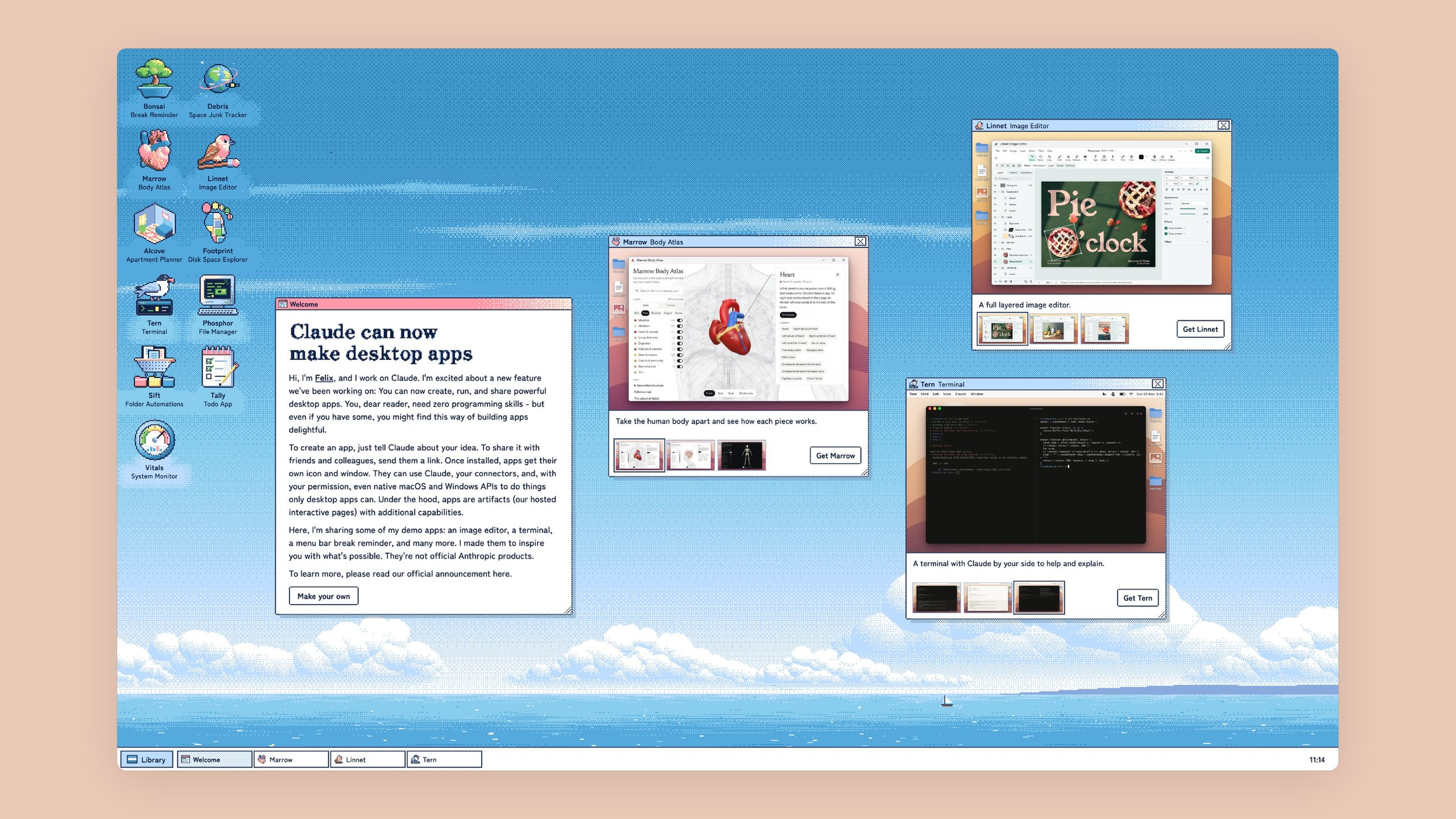
However, the increased functionality introduces important security considerations. According to Anthropic's official support documentation, applications granted full computer access can execute programs and modify or delete local files. Anthropic does not independently review applications before installation, making permission management and source verification particularly important.
Despite appearing as independent desktop software, installed Artifacts remain connected to the Claude ecosystem. Users must be signed in and connected to the internet to launch applications, while AI requests and application development count toward their subscription usage limits. These restrictions are particularly relevant following Epic Games CEO Tim Sweeney's recent criticism of Claude's automated protection mechanisms, highlighting the potential limitations of relying on proprietary cloud based AI services.
Anthropic's latest development represents a significant step toward making personalized software development accessible to everyday computer users. For PC enthusiasts, gamers, content creators, and small businesses, the ability to create custom utilities without extensive programming knowledge could substantially improve productivity and reduce dependence on expensive software subscriptions.
Potential applications include personalized game libraries, benchmark dashboards, hardware monitoring interfaces, local AI management tools, and automated content production workflows.
However, the next logical evolution should involve independent executable exports, offline functionality, local AI model integration, and Linux compatibility. Users should be able to retain full control over the applications they create without remaining permanently dependent on an AI provider's infrastructure, account restrictions, or subscription policies.
AI assisted software development should empower users to become creators and owners of their software rather than simply expanding the ecosystem of cloud dependent applications.
If you could create your own Windows or Mac application without programming knowledge, what would you build? Would you prefer Claude's integrated ecosystem or the ability to export fully independent offline applications?
