
AMD Zen 6 Ryzen Desktop CPUs Reportedly Drop iGPU For Integrated NPU

AMD’s next generation Ryzen desktop CPUs may trade basic integrated graphics for AI acceleration, according to a new Olympic Ridge roadmap rumor.
AMD’s Zen 6 desktop lineup, reportedly codenamed Olympic Ridge, is expected to arrive in 2027 with major architectural changes. The latest rumor from Gotou_kai3 claims the chips will add an integrated NPU while removing the small onboard iGPU found on current AM5 Ryzen desktop processors. That would be a meaningful shift for AMD’s mainstream desktop strategy. Since Ryzen 7000, AMD has included a small 2 CU Radeon iGPU on standard desktop Ryzen CPUs. It was not built for serious gaming, but it was useful for basic display output, office systems, and troubleshooting when a discrete GPU was unavailable.
If Olympic Ridge removes that iGPU, users may need a working discrete graphics card to diagnose display issues, black screens, or failed GPU setups. That is not a huge problem for most enthusiast gaming PCs, but it does reduce the convenience that AM5 desktop Ryzen users currently have.
Olympic Ridge:
— Gotou_3rd (@Gotou_kai3) June 15, 2026
+ integrated NPU
+ CUDIMM support
- integrated GPU
Still no integrated USB4 controller support.
The reported NPU addition is the bigger story. AMD already offers NPUs through Ryzen 8000G desktop APUs and Ryzen AI mobile processors, but Olympic Ridge would reportedly bring NPU support to standard non APU Ryzen desktop chips for the first time. That fits the broader PC market direction. Windows AI features, local inference, background AI tools, creator workflows, and small on device models are pushing chipmakers to include dedicated AI hardware across more products.
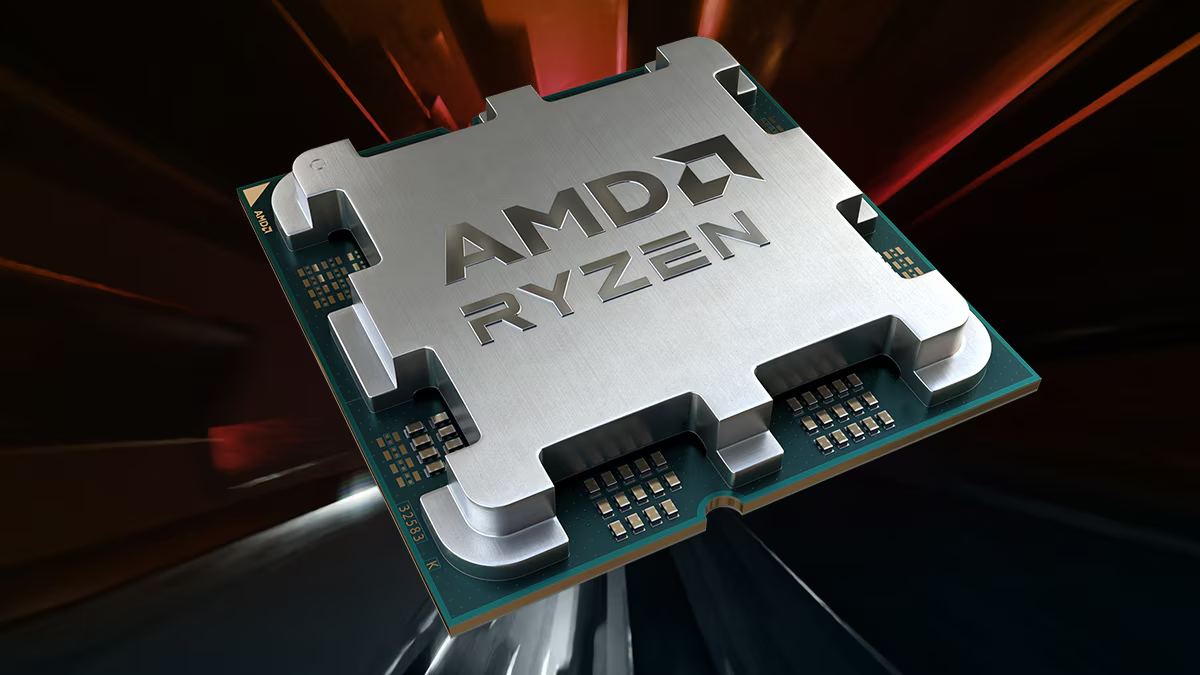
Olympic Ridge is also rumored to use AMD’s Zen 6 core architecture and TSMC’s 2nm class N2P process. Reports point to a new CCD design with up to 12 cores and 48MB of L3 cache per chiplet. That could allow AMD to offer desktop Ryzen configurations with 6, 8, 10, and 12 cores on a single CCD, plus 16, 20, and 24 core options using 2 CCDs. If accurate, that would raise AMD’s mainstream desktop ceiling beyond the current 16 core limit.
The platform is also expected to improve memory support. Current reporting points to stronger DDR5 tuning, CUDIMM support, and a broader EXPO 1.2 feature stack, including Ultra Low Latency profiles. That matters because memory performance has become a bigger part of the desktop CPU story, especially for gaming and high refresh rate systems.
| CPUs | Intel Core Ultra 400 | AMD Ryzen 10000? |
|---|---|---|
| Family | Nova Lake-S | Olympic Ridge |
| Architecture | Coyote Cove (P-Core) Arctic Wolf (E/LP Core) |
Zen 6 |
| CPU Process | TSMC N2P | TSMC N2P |
| Core Count (Max) | 52 | 24 |
| Thread Count (Max) | 52 | 48 |
| Max P-Cores | 16 | 24 |
| Max E-Cores | 32 | N/A |
| Max LP-E Cores | 4 | N/A |
| Max Cache (L2+L3) | 160-320 MB | 96 MB L3 |
| Max bLLC Cache | 144-288 MB | 64 MB per stack? |
| DDR5 (1DPC 1R) | 8000 MT/s CUDIMM - Yes |
7200 MT/s? CUDIMM - Yes |
| PCIe 5.0 Lanes (Max) | 36 | TBD |
| PCIe 4.0 Lanes (Max) | 16 | TBD |
| Socket Support | LGA 1954 | AM5 |
| Max TDP (PL1) | 125-175W | 125W+ |
| Max Power | ~700W (Dual) ~350W (Single) |
TBD |
| Launch | 2027 | 2027 |
If this rumor is accurate, AMD is making a clear trade.
Removing the iGPU makes desktop Ryzen less convenient for troubleshooting and basic display output, but adding an NPU gives the platform a stronger future facing feature set. AMD may be deciding that AI acceleration matters more for the next decade than a small diagnostic graphics block.
For gamers, the iGPU loss probably will not matter much. Most Ryzen desktop buyers pair these CPUs with discrete graphics cards anyway. For system builders, repair shops, offices, and users who rely on onboard video for diagnostics, it could be more frustrating. The NPU addition is more strategic. AMD cannot let Intel own the AI PC message on desktop, especially as Nova Lake approaches. If Zen 6 Ryzen brings higher core counts, better efficiency, improved memory support, and dedicated AI acceleration, Olympic Ridge could become one of AMD’s most important desktop launches since Ryzen 7000.
For now, this remains a rumor. AMD has not confirmed Olympic Ridge specifications, NPU integration, iGPU removal, or final platform features. But the direction makes sense. Desktop CPUs are no longer only about cores and clocks. They are becoming full platform engines for gaming, creation, productivity, and local AI.
Would you accept losing the small Ryzen desktop iGPU if AMD replaces it with a dedicated NPU for local AI workloads?
