
LG UltraGear 25G590B Becomes the First Native 1000Hz Full HD Gaming Monitor for Competitive Esports
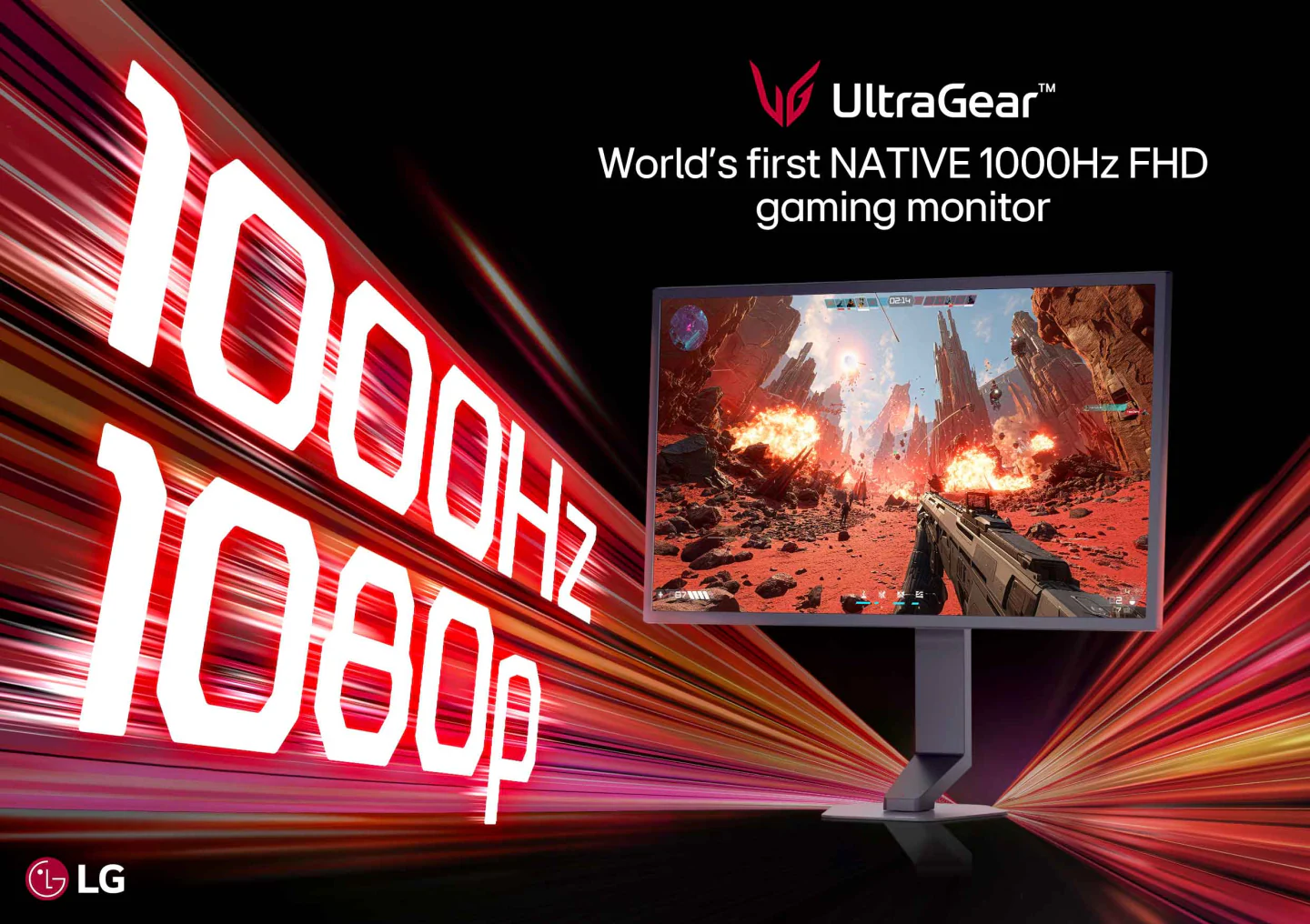
LG is pushing competitive gaming displays into a new performance tier with the introduction of the LG UltraGear 25G590B, the company’s first Full HD gaming monitor with a native 1000Hz refresh rate. The new model is designed specifically for esports and fast paced FPS titles, where motion clarity, visual response, and input precision can directly influence competitive performance.
The UltraGear 25G590B is not the first display concept to touch the 1000Hz category, but LG’s key claim is that this is the world’s first native 1000Hz Full HD gaming monitor introduced by a consumer electronics brand. That distinction matters because earlier 1000Hz class displays have generally relied on reduced resolution modes, often dropping to 720p to reach their maximum refresh rate. LG’s new monitor delivers its 1000Hz refresh rate at 1920 x 1080 resolution by default, avoiding the visual compromise that comes from lowering resolution during competitive play.
For esports players, this is a major technical milestone. Higher refresh rates allow the display to update more frequently, which can make motion appear smoother and reduce the delay between action happening in game and the player seeing it on screen. At 1000Hz, the display is theoretically updating every 1 millisecond, creating an extreme performance ceiling for players who want the fastest possible visual feedback.
LG is positioning the 25G590B around a 24.5 inch IPS panel, which is a familiar size for competitive gaming environments. This format keeps the full gameplay area within a player’s natural field of view, helping reduce excessive eye movement while tracking opponents, checking angles, and reacting to fast movement. It is a practical choice for esports rather than a simple specification flex.
The monitor also includes LG’s Motion Blur Reduction Pro technology, designed to make fast moving objects appear sharper and easier to track. For competitive shooters, this can help players follow lateral movement, identify targets more clearly, and maintain focus during intense fights. LG also combines the IPS panel with a low reflection film to improve visibility and reduce glare across different gaming environments.
"This is a defining moment for gaming monitors. By delivering the world’s first native 1000Hz FHD gaming monitor, LG has established a new performance benchmark for competitive gaming."
- Lee Choong hwoan, head of Display Business
Beyond raw refresh rate, LG is also integrating on device gaming AI features. AI Scene Optimization adjusts picture settings based on the game genre, while AI Sound is designed to provide a more spatial audio experience and clearer in game communication when used with compatible headsets. These features are aimed at improving immersion and usability without distracting from the monitor’s main competitive focus.
The biggest practical challenge is simple. Driving a game at 1000 FPS remains extremely difficult. Even with top tier CPUs and GPUs, only specific esports titles and extremely optimized settings may approach that level of frame output. Games like Counter Strike 2 can reach very high frame rates under the right conditions, but achieving consistent performance near 1000 FPS will still require elite hardware and careful system tuning.
That means the UltraGear 25G590B is not aimed at the average casual player. It is built for competitive gamers, esports professionals, hardware enthusiasts, and performance focused users who care about every possible reduction in visual latency. For most players, the difference between 240Hz, 360Hz, 500Hz, and 1000Hz will depend heavily on the game, GPU output, mouse polling rate, system latency, and personal sensitivity to motion clarity.
Still, LG’s announcement matters because gaming monitors have now entered a new phase. For years, 144Hz was considered premium, then 240Hz became the esports target, followed by 360Hz and 500Hz class panels. A native 1000Hz Full HD monitor signals that display makers are now pushing beyond conventional expectations, even if the PC hardware ecosystem needs time to fully catch up.
The 25G590B also includes a compact esports focused stand with height, swivel, and tilt adjustments, along with calibration indicators that allow players to replicate their preferred setup more easily. LG says the smaller stand footprint is designed to preserve desk space and provide more room for mouse movement, another detail clearly aimed at serious competitive players.
Pricing has not yet been disclosed, but LG says the UltraGear 25G590B is expected to launch in select markets in the second half of 2026, with availability in additional markets to follow later in the year.
For the gaming monitor industry, the UltraGear 25G590B is more than another high refresh panel. It is a statement product showing where esports displays are heading next. While 1000Hz gaming will not become mainstream overnight, LG has set a new benchmark for motion performance, and other display brands will likely respond quickly.
For competitive gamers, the real question is not whether 1000Hz is impressive. It clearly is. The question is whether current PC hardware, game engines, and esports titles can consistently take advantage of it. If the answer improves over time, LG’s UltraGear 25G590B could be remembered as one of the first serious steps into the next era of ultra smooth competitive gaming.
What do you think about 1000Hz gaming monitors? Is this the future of esports displays, or are we reaching a point where GPU performance matters more than refresh rate?
